
IQ Battery 10C
Current model: IQBATTERY-10C-1P-NA
Enphase's current 10 kWh battery, built for higher power and the fourth-generation Energy System.
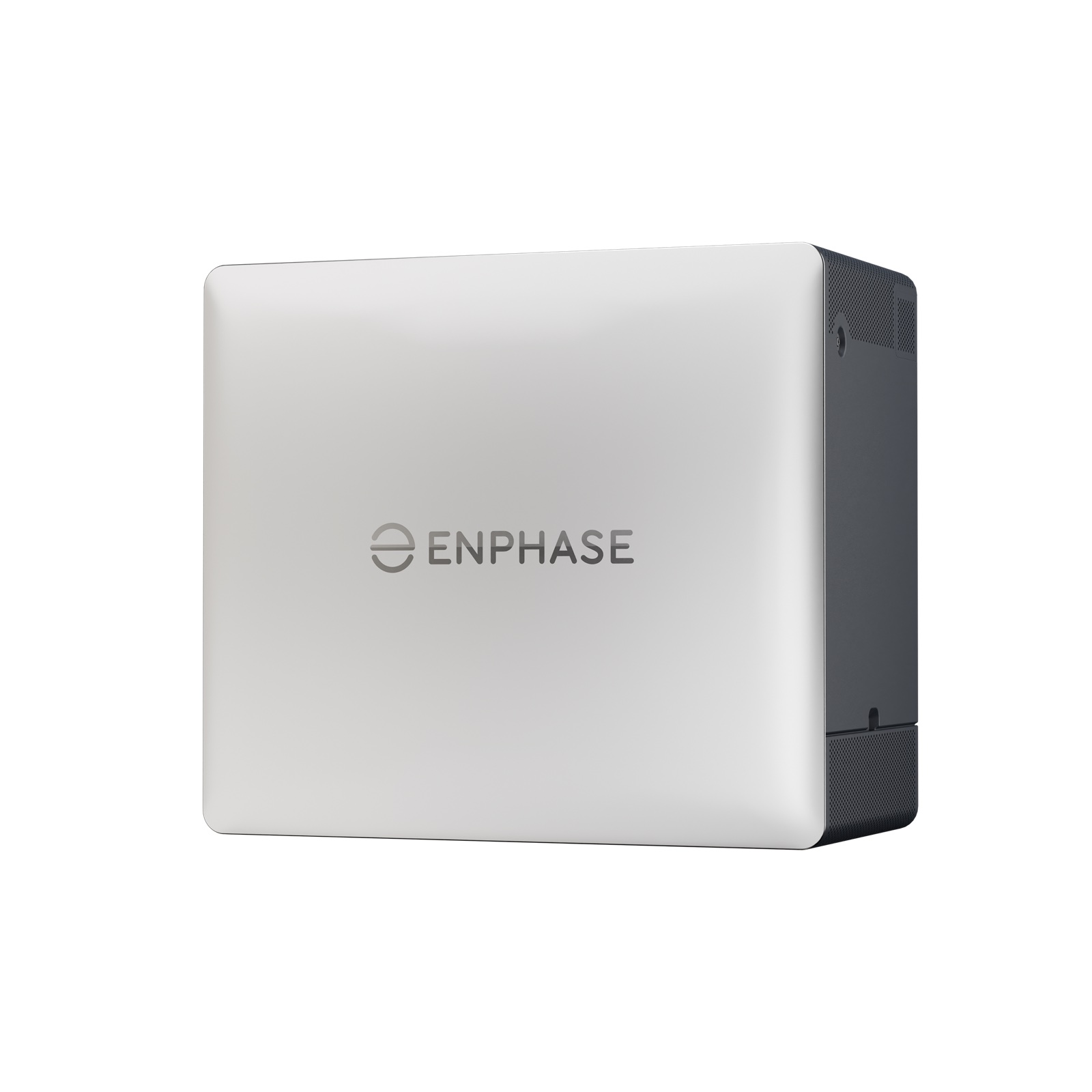
Enphase's current 10 kWh battery, built for higher power and the fourth-generation Energy System.
The IQ Battery 10C is Enphase's current North American home battery. Each unit provides 10.0 kWh of usable energy and 7.08 kW of continuous output through four embedded grid-forming microinverters. It integrates with the fourth-generation Enphase Energy System and Enphase App; Sunstorm pairs Enphase solar with the IQ8X or IQ8HC microinverter selected for the panel's electrical characteristics.
Final model, configuration, availability, and warranty terms are confirmed in the written proposal.
Enphase IQ Battery 10C at a glance.
These manufacturer-published figures help compare equipment. Final compatibility, configuration, and warranty coverage are confirmed for the specific project.
| Specification | Published value |
|---|---|
| Model | IQBATTERY-10C-1P-NA |
| Usable energy | 10.0 kWh |
| Continuous output | 7.08 kW |
| Solar input / architecture | AC-coupled · 4 embedded grid-forming microinverters |
| Battery chemistry | Lithium iron phosphate (LFP) |
| Manufacturer warranty | 15 years / 6,000 cycles · 60% retained capacity |
Strengths worth putting into context.
- Four embedded grid-forming microinverters
- LFP chemistry in a 10 kWh modular format
- 7.08 kW continuous power from one battery
- Integrated Enphase monitoring and system controls
Projects with these priorities.
- Homeowners who value detailed Enphase monitoring
- Solar projects built around the fourth-generation Enphase Energy System
- Projects that want modular storage expansion
Questions we answer before specifying IQ Battery 10C.
- Is the solar system compatible with the fourth-generation Enphase architecture?
- Is the goal essential-load or broader whole-home backup?
- How many 10C batteries meet both power and runtime needs?
- Which System Controller and load-control equipment are required?
Specifications are only the starting point.
Published capacity, output, efficiency, and warranty information help narrow the field. A valid Florida project also requires compatible electrical design, roof or mounting review, permits, utility interconnection, manufacturer instructions, and a clear service plan.
We use the current manufacturer documentation when preparing the final system scope. If equipment availability changes, any proposed substitution should be documented and reviewed before installation.